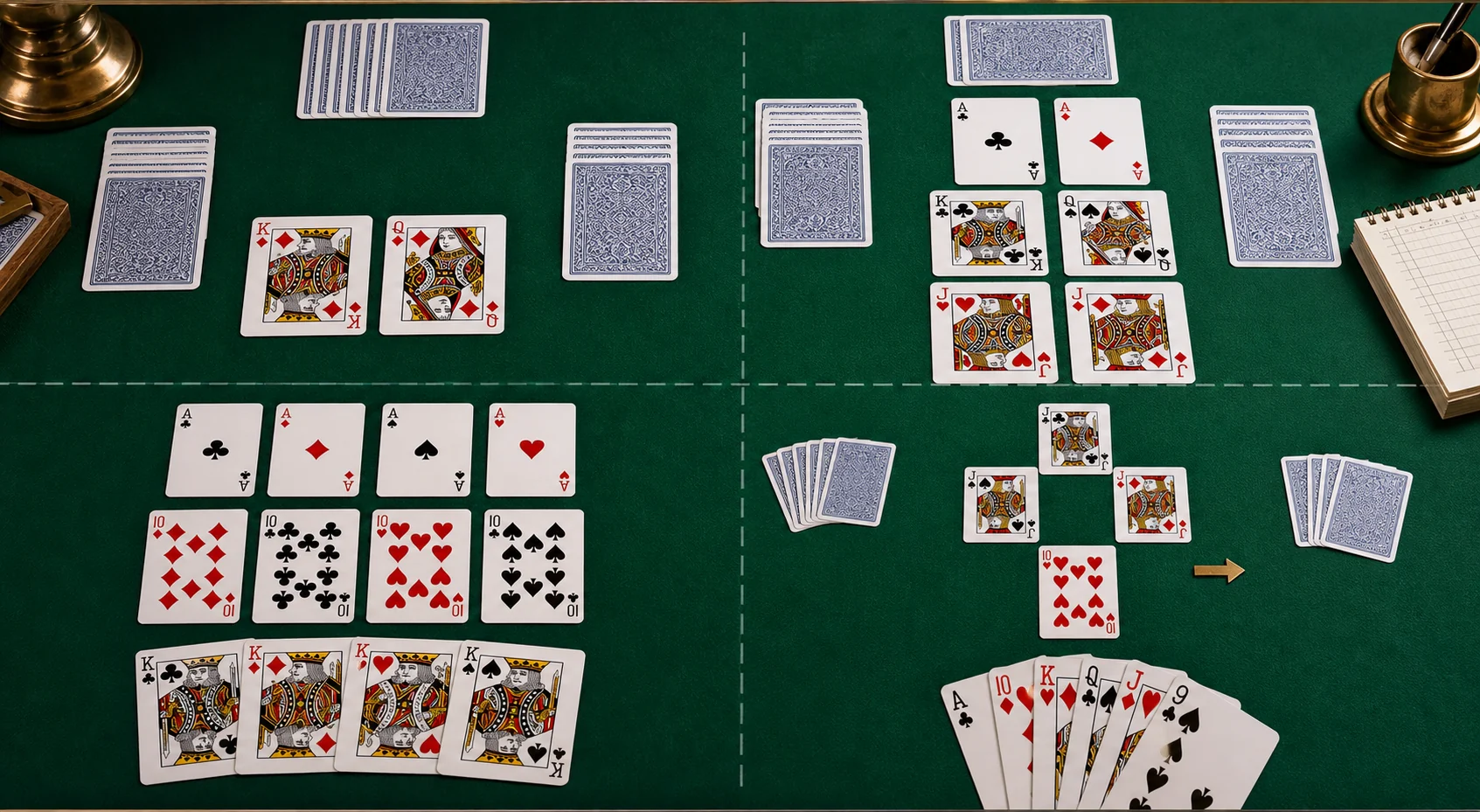
Pinochle is easiest to understand when you treat the hand as three connected jobs. First, players bid for the right to name trump. Second, the winning side counts meld, which is the value of certain card combinations before trick play begins. Third, everyone plays tricks and fights over counters. A hand is not won by one of those jobs alone; the score comes from how well they support each other.
Most classic single-deck Pinochle uses a 48-card deck. It contains two copies of the ace, ten, king, queen, jack, and nine in each suit. The ranking inside a suit is usually ace high, then ten, king, queen, jack, and nine. That order surprises players coming from poker or many standard trick-taking games because the ten is stronger than the king. Remembering that one detail prevents a lot of early mistakes.
The Deal and the Shape of the Deck
Four-player partnership Pinochle is the format many players picture first, with partners sitting across from each other. Two-player and three-player versions exist, and online tables may adjust details, but the same card logic remains. The compact deck means every card has a job. There are no twos through eights to hide behind, so high cards appear often and every suit can turn into a fight quickly.
When your hand arrives, sort it by suit and strength before judging anything else. Long suits, aces, tens, and possible trump runs tell you whether the hand can bid. Queens, jacks, kings, and aces across suits may also point to meld. A hand that looks pretty because it has several combinations can still fail if it has no way to win tricks after meld is counted.
Bidding Comes Before the Cards Are Played
The bid is a promise. Players take turns naming a number, passing, or raising according to the table rules. The winning bidder usually chooses trump. That choice is powerful because trump can beat non-trump cards when a player cannot follow suit. The bid should account for likely meld plus likely trick points. If either half is imaginary, the contract becomes expensive.
A beginner should avoid treating bidding as a guessing contest. Look for concrete reasons: a strong trump suit, a run, several aces, or enough meld to cover part of the number before trick play starts. Passing with a soft hand is not cowardice. In Pinochle, discipline is a skill because a reckless bid can sink a side before the first trick is led.
Meld Is Scored Before Trick Play
Meld rewards combinations such as a run in trump, a marriage of king and queen in a suit, a pinochle made from the queen of spades and jack of diamonds, or cards of the same rank around all suits. Exact values can vary by house or online table, so check the rules panel before assuming a number. The important lesson is that meld gives the bidder a head start, not a free win.
After meld is counted, those cards return to the hand for trick play. This is where new players sometimes get confused. Showing a marriage or pinochle does not remove those cards. They still have to be played later, and their trick value may be modest unless the suit, trump, or table position helps them.
Tricks, Trump, and Counters
Trick play begins after meld. A player leads a card, and the others follow according to the table rules. In many Pinochle versions, players must follow suit if they can. If they cannot follow suit, trump may be used. Some tables also require players to beat the current winning card if able. Online play usually enforces these rules automatically, but knowing them makes the table easier to read.
Counters are the cards that matter for trick points. Aces, tens, and kings are commonly counted, and the last trick may also carry value depending on the rules. This means winning a trick full of low cards may not help much, while losing a trick containing tens and kings can hurt. Good players do not throw counters casually. They try to place them where their side is likely to take the trick.
How a Hand Ends
Once all tricks are played, the table adds meld and trick points, then checks whether the bidding side made the contract. If they did, the points stand. If they failed, penalties or set scores apply according to the table. The defenders may also score their earned points if they reached the minimum required by the rules.
The full rhythm is simple after a few hands: deal, bid, choose trump, show meld, play tricks, count counters, settle the contract. What makes Pinochle deep is that every stage changes the next one. A bid changes trump. Trump changes trick control. Meld changes risk. The contract changes how boldly each side must play. Return to the Pinochle Online table and watch those stages one at a time; the game becomes much clearer when the sequence is visible.