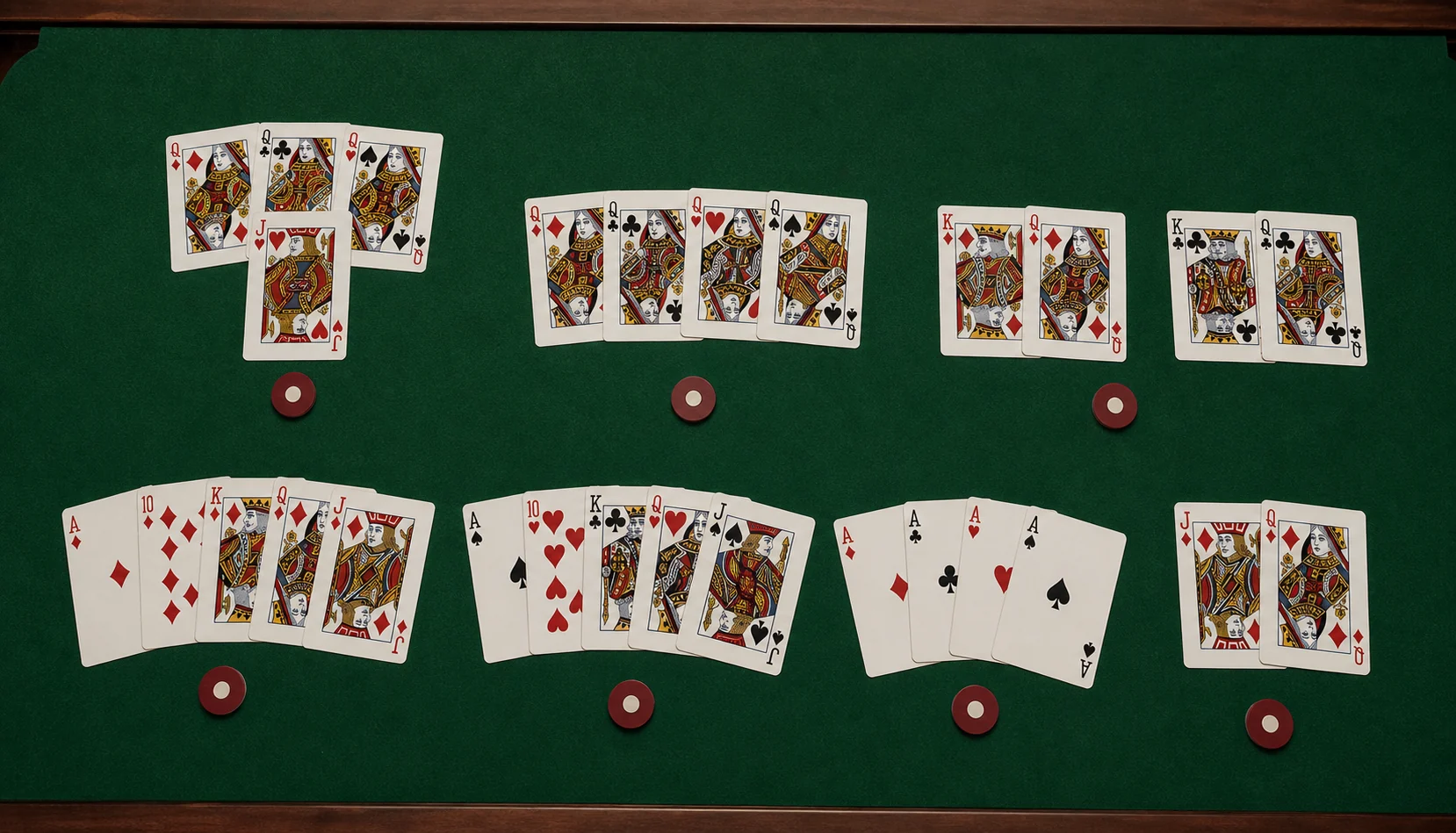
Meld is the scoring language Pinochle speaks before the tricks begin. It turns certain card combinations into points and gives a bidder part of the contract before anyone leads. A player who understands meld can judge a hand faster, bid with more confidence, and avoid being fooled by combinations that look valuable but do not play well.
Exact values vary by ruleset, especially between single-deck, double-deck, and local house tables. Online rooms usually publish the values inside the rules panel. The names, however, are familiar across most versions: runs, marriages, pinochle, arounds, and related doubled forms. Learn the shapes first, then attach the table's point values to them.
Runs in Trump
A run is one of the most important meld patterns because it uses the trump suit. In many rulesets, a run contains ace, ten, king, queen, and jack of trump. That is not only a scoring combination; it also says something about control. A player with a trump run may have enough strength to pull trump, protect counters, and support a meaningful bid.
Still, a run is not magic. If your trump suit is only the run and nothing else, you may have fewer spare trump than the bid requires. If the rest of the hand lacks aces or counters, you may score well in meld but struggle during play. Strong players ask what the run does after it is counted. Can it win tricks? Can it draw defenders' trump? Can it keep the contract alive?
Marriages and Trump Marriages
A marriage is the king and queen of the same suit. In many games, a marriage in trump is worth more than a marriage outside trump. This makes sense because trump is the suit that controls the hand. A trump marriage may help a bid and may also provide cards that matter during trick play.
Beginners sometimes overvalue scattered marriages. Three non-trump marriages may look impressive, but they can be fragile if the cards do not win tricks or support a trump plan. A marriage is best when it fits the rest of the hand. A king and queen in a long suit, or in a suit where your partner may help, can matter more than a lonely combination in a suit you cannot protect.
The Pinochle Combination
The named pinochle meld is traditionally the queen of spades and jack of diamonds. A double pinochle uses both copies of each card in a double-deck style or the required duplicated cards under the table's rules. It is one of the game's signature combinations because it is specific, memorable, and easy to spot once you know it.
The mistake is treating pinochle meld as a complete hand. It is a useful boost, not a trick plan. The queen of spades and jack of diamonds may not be strong trick winners unless the suit situation helps. Count the meld, then return to the larger question: how will this hand win counters after the display is over?
Arounds and Rank Patterns
Arounds reward having one card of the same rank in every suit, such as aces around, kings around, queens around, or jacks around. These combinations help players see value outside a single suit. Aces around is especially attractive because aces also win tricks. Queens around and jacks around may be useful for meld but require more care during play.
Rank patterns can hide weakness. A hand with queens around may score, but queens are not the top of the trick order. If the rest of the hand is thin, you may have meld without authority. Aces around, by contrast, often gives both meld and actual winners. This is why experienced players weigh meld quality, not just meld quantity.
Meld and Bidding
Meld should influence bidding, but it should not make the bid by itself. Start with confirmed meld, then estimate trick points. If your table requires a minimum trick score to count meld, remember that a big meld hand can still fail if it does not take enough during play. The bid should describe the whole hand, not only the best-looking cards.
A useful habit is to separate meld into three groups: secure meld you can count, conditional meld that depends on naming trump, and tempting patterns that may not be worth a bid. A trump run is conditional until you win the bid and name that suit. A non-trump marriage may be secure but modest. Pinochle is secure if the cards are present, yet it may not tell you much about trick control.
After Meld Is Counted
Once meld is shown, the cards return to normal play. This creates a second layer of judgment. A card that scored in meld can still be lost in a trick. A queen that helped make pinochle may later be a weak card unless the suit position protects it. A king from a marriage may become a counter or a liability depending on timing.
Good meld reading is practical. It helps you bid, but it also warns you what the hand still lacks. If you count a strong meld and then see no way to win counters, the bid must stay realistic. If you count modest meld but hold strong trump and aces, the hand may play better than it looks. Practice spotting the combinations at the Pinochle Online table, then test whether the meld actually supports the tricks you need.